Trees can be some of the most valuable features within a garden. They provide structure, greenery, shade and character while helping an outdoor space feel established and attractive. However, trees are living structures that continually change, and without appropriate management, their growth or deterioration can begin to affect the areas around them.
Overextended branches may grow towards roofs, paths or garden structures. Dense crowns can overwhelm smaller gardens, while dead or weakened branches can become increasingly vulnerable to failure. In other situations, a tree may simply have outgrown the space available to it.
Professional tree surgery helps manage these issues while considering the tree itself and the environment surrounding it. For homeowners in Nailsea, Bristol, EM Tree Surgery Nailsea provides professional tree surgery focused on maintaining safer, more manageable and better-balanced outdoor spaces.
Why Is Tree Management Important Around a Property?
A mature tree can occupy a substantial amount of space above and around a garden.
As its branches extend, they may begin interacting with buildings, fences, sheds, paths, driveways and other garden features. The tree’s condition can also change naturally over time.
Regular observation and appropriate tree surgery can help identify problems before they become significantly more difficult to manage.
Tree Surgery Can Help Address:
- Overextended branches
- Dead or weakened limbs
- Excessively dense crowns
- Trees becoming too large for their surroundings
- Branches approaching buildings
- Unbalanced growth
- Obstruction around paths and access areas
- Trees that require controlled removal
The correct approach depends on the individual tree rather than applying the same treatment to every situation.
Protecting Roofs and Buildings From Overhanging Branches
Branches growing towards a house deserve attention before they begin making regular contact with the building.
As trees move naturally in windy conditions, branches close to roofs, gutters and walls can create unwanted contact. Falling deadwood can also affect whatever lies underneath.
Warning Signs Can Include:
- Branches extending directly over the roof
- Limbs touching roof coverings
- Growth pressing towards walls
- Branches interfering with gutters
- Deadwood positioned above structures
Professional pruning can selectively remove or reduce problematic growth while maintaining an appropriate shape for the tree.
Crown Reduction Can Control Excessive Growth
Sometimes a tree remains suitable for its location but has simply become larger than is practical.
Crown reduction involves carefully reducing the overall size and spread of the crown while retaining a balanced form.
Crown Reduction Can Be Useful When:
- Branches have extended too far across the garden
- The canopy is approaching nearby structures
- The tree has become visually dominant
- Particular limbs have become overextended
- A more manageable overall size is required
Correct pruning is important because indiscriminate cutting can leave a tree poorly shaped and create unnecessary stress.
Removing Dead and Weakened Branches
Dead branches are not simply an appearance issue.
As deadwood deteriorates, it can become more vulnerable to breaking away from the tree. This is particularly important where branches are positioned above areas people regularly use.
These might include:
- Patios
- Garden seating
- Paths
- Driveways
- Lawns
- Entrances
- Other frequently used outdoor spaces
Removing appropriate deadwood can reduce avoidable hazards while leaving healthy parts of the tree intact.
Tree Surgery Can Help Keep Paths and Driveways Clear
Low or spreading branches can gradually interfere with access around a property.
A driveway that was previously clear may become increasingly restricted as branches extend into the vehicle route. Garden paths can experience similar problems when low growth reduces headroom or narrows the usable space.
Selective pruning can restore clearance while avoiding unnecessary removal of healthy branches elsewhere in the crown.
Managing Trees Around Fences and Garden Structures
Trees do not grow according to property layouts.
Branches may eventually extend over fencing, sheds, garden rooms or other outdoor structures. If left unmanaged, the available clearance can become increasingly limited.
Professional tree surgery can manage growth according to the surrounding environment, helping trees coexist more successfully with other features within the garden.
Can Tree Surgery Make a Garden More Usable?
Yes. Tree surgery is not only about responding to visibly dangerous trees.
Managing an oversized or excessively dense canopy can significantly influence how the rest of the garden feels.
A tree that dominates a relatively compact space may restrict light, interfere with pathways or overwhelm nearby planting.
Appropriate Tree Work Can Help:
- Improve clearance
- Create a better sense of space
- Reduce excessive canopy spread
- Make paths easier to use
- Improve the relationship between trees and surrounding landscaping
- Restore a more balanced garden layout
The objective should be thoughtful management rather than automatically removing trees simply because they are large.
Why Tree Balance Matters
Trees naturally develop in response to their surroundings.
In some situations, growth may become noticeably heavier on one side. Individual branches can also become disproportionately long compared with the rest of the crown.
An experienced tree surgeon can assess the structure before deciding whether selective pruning would be beneficial.
Good tree surgery considers the complete form of the tree rather than simply cutting whichever branch appears inconvenient.
What Is Crown Thinning?
Where appropriate, crown thinning involves selectively removing branches throughout the canopy without substantially changing its overall size or shape.
This can reduce excessive density and improve the structure of the crown.
It requires careful judgement because removing too much growth can be counterproductive. Professional tree surgeons select branches strategically rather than creating unnecessary gaps throughout the canopy.
What Is Crown Lifting?
Crown lifting involves removing selected lower branches to increase clearance beneath the canopy.
This can be particularly useful where trees grow alongside:
- Paths
- Driveways
- Lawns
- Entrances
- Seating areas
- Other frequently used parts of the garden
Increasing appropriate clearance can make the surrounding outdoor space more practical while retaining the main structure and character of the tree.
Stormy Weather Can Reveal Existing Weaknesses
Strong winds do not always create a problem from nothing.
They can expose branches that were already weakened, damaged or structurally vulnerable.
Following particularly windy weather, homeowners may notice:
- Newly broken branches
- Hanging limbs
- Branches resting against other parts of the tree
- Significant changes in the crown
- Fresh splits
- Trees appearing different from before
These changes are worth assessing, particularly when affected branches are positioned above buildings or regularly used areas.
Cracks and Splits Should Not Be Ignored
Visible cracks within larger branches or the main structure of a tree deserve professional attention.
Not every crack means that immediate removal is necessary, but its significance cannot reliably be judged simply from appearance.
A tree surgeon can consider the location and extent of the defect alongside the size, form and overall condition of the tree.
When Does Tree Felling Become Appropriate?
Professional tree surgery often focuses on retaining and managing trees wherever appropriate. However, there are circumstances where removal may be the most suitable option.
A tree may have severe structural deterioration, substantial damage or other problems that mean ordinary pruning would not adequately address the situation.
Before Felling Is Considered, Assessment Can Look At:
- Overall tree condition
- Structural stability
- Significant defects
- Position relative to property and garden features
- The practicality of retaining the tree
- Whether suitable pruning could address the problem
This avoids assuming that every problematic tree automatically needs removing.
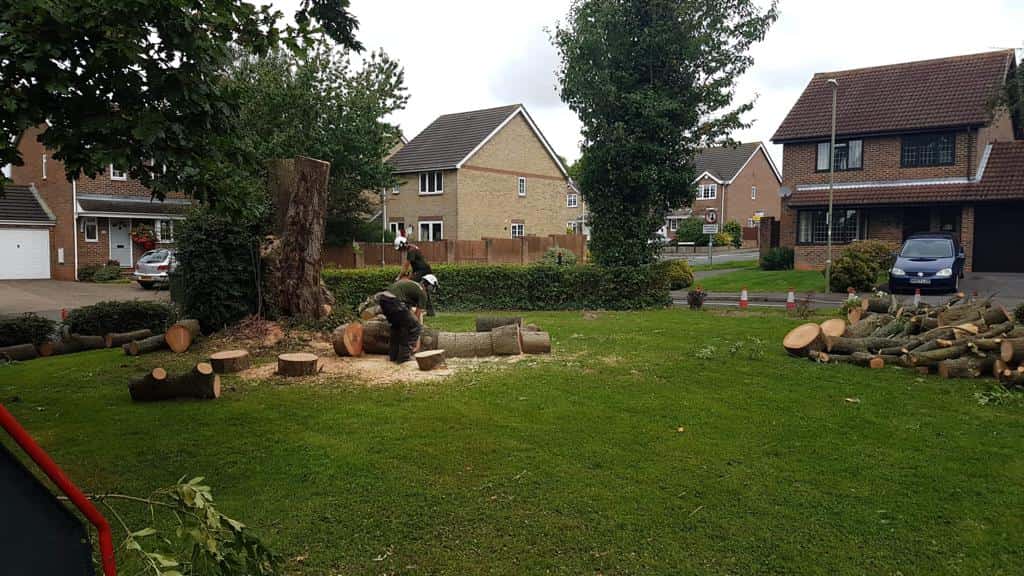
Why Sectional Dismantling May Be Necessary
Trees growing within residential gardens are often surrounded by features that need to remain undisturbed.
There may not be enough open space to fell the complete tree in one movement.
Sectional dismantling allows the tree to be carefully removed in controlled sections. Branches and parts of the stem can be progressively taken down according to the available working space.
This requires experience, careful planning and appropriate techniques, particularly where buildings, fences or other garden features are nearby.
Stump Removal Can Restore Usable Garden Space
Once a tree has been removed, the remaining stump can continue occupying useful space.
It may interfere with:
- Lawn maintenance
- New planting
- Paths
- Landscaping plans
- General use of the garden
Stump grinding can reduce the remaining stump and make the area easier to incorporate into future garden use.
Why DIY Tree Work Can Be Problematic
Tree pruning can look straightforward from ground level, but larger branches can be extremely heavy and difficult to control once cut.
Working at height introduces additional challenges, while incorrect cuts can damage the tree or result in unpredictable branch movement.
Professional Tree Surgery Provides:
- Knowledge of tree structure
- Appropriate pruning techniques
- Controlled working methods
- Suitable equipment
- Experience working around buildings and garden features
- An understanding of how individual cuts affect the remaining tree
For substantial tree work, professional expertise can make an important difference to both the quality and control of the work.
Avoid Removing More Growth Than Necessary
More pruning is not automatically better.
Trees need sufficient healthy growth to function effectively, and excessive cutting can create unnecessary problems.
Professional pruning aims to achieve a specific objective with appropriate intervention.
That may mean reducing one overextended section, lifting selected lower branches or removing deadwood rather than heavily cutting the entire crown.
Signs a Tree May Need Professional Attention
Homeowners do not need to wait until a branch fails before arranging an assessment.
Consider Professional Advice If You Notice:
- Large dead branches
- Hanging or broken limbs
- Cracks or splits
- Branches contacting the property
- Excessive growth over roofs or structures
- Restricted driveway or path access
- A noticeably unbalanced crown
- Significant changes after strong winds
- A tree that has become difficult to manage within its location
Early assessment can provide a clearer understanding of whether any work is actually required.
Tree Surgery Can Improve the Whole Garden
Trees should ideally complement the rest of the outdoor space rather than dominate or restrict it unnecessarily.
Careful management can create better relationships between mature trees, lawns, planting, patios, paths and buildings.
This does not mean forcing every tree into a particular shape. It means understanding how the tree is developing and using appropriate techniques when intervention would improve its condition or its relationship with the surrounding garden.
Professional Tree Surgery in Nailsea
For homeowners in Nailsea, Bristol, EM Tree Surgery Nailsea provides professional tree surgery focused on practical, considered tree management.
Whether trees require pruning, crown management, deadwood removal or more substantial work, the first priority is understanding the tree and its surroundings.
By assessing growth, structure, nearby property features and the way the outdoor space is used, suitable tree work can be planned without carrying out unnecessary intervention.
Conclusion
Professional tree surgery can help protect properties, gardens and outdoor spaces by managing trees before excessive growth or deterioration becomes a more significant concern.
Selective pruning can provide better clearance around roofs, paths, driveways and garden structures. Crown management can keep established trees more appropriate for their surroundings, while removing dead or weakened branches can address potential problems above frequently used areas.
Most importantly, effective tree surgery is based on assessment rather than unnecessary cutting. The right solution depends on the individual tree, its condition and its relationship with the surrounding property.
If trees around your property in Nailsea, Bristol have become overgrown, damaged or difficult to manage, EM Tree Surgery Nailsea can assess them and recommend appropriate professional tree work to help keep your garden and outdoor spaces well managed.
Call us on: 01275 402 923
Click here to find out more about EM Tree Surgery Nailsea
Click here to complete our contact form and see how we can help with your trees needs.